Assembly Summer 2026 · AI Coding · 03:00
MEMORIA 028
Six typographic universes gather, strain, and collapse. Ink, gravity, polarity, and what remains.
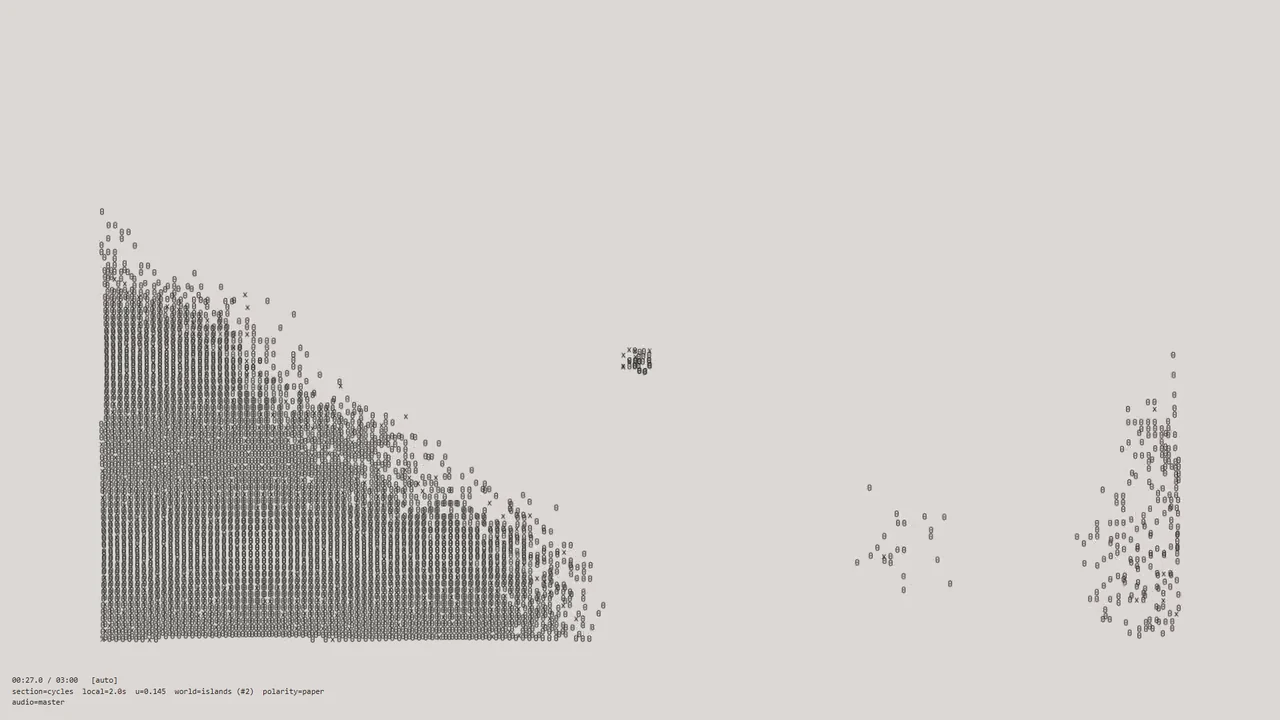
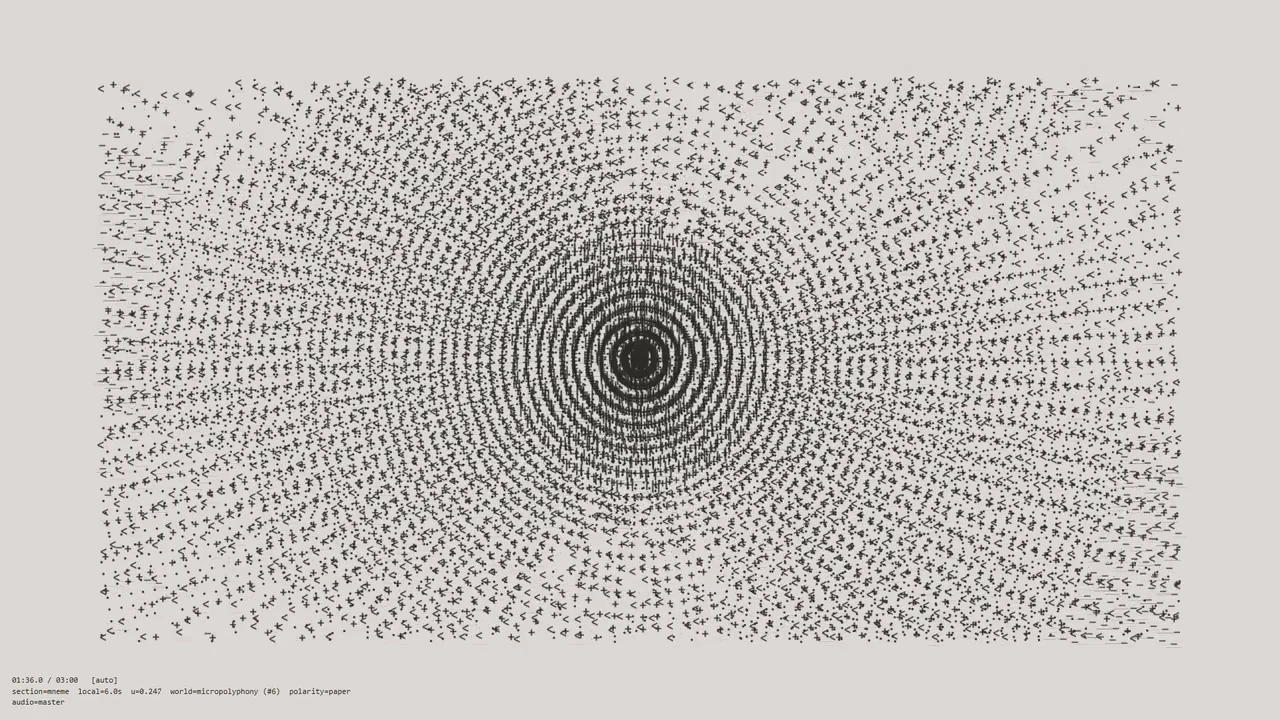
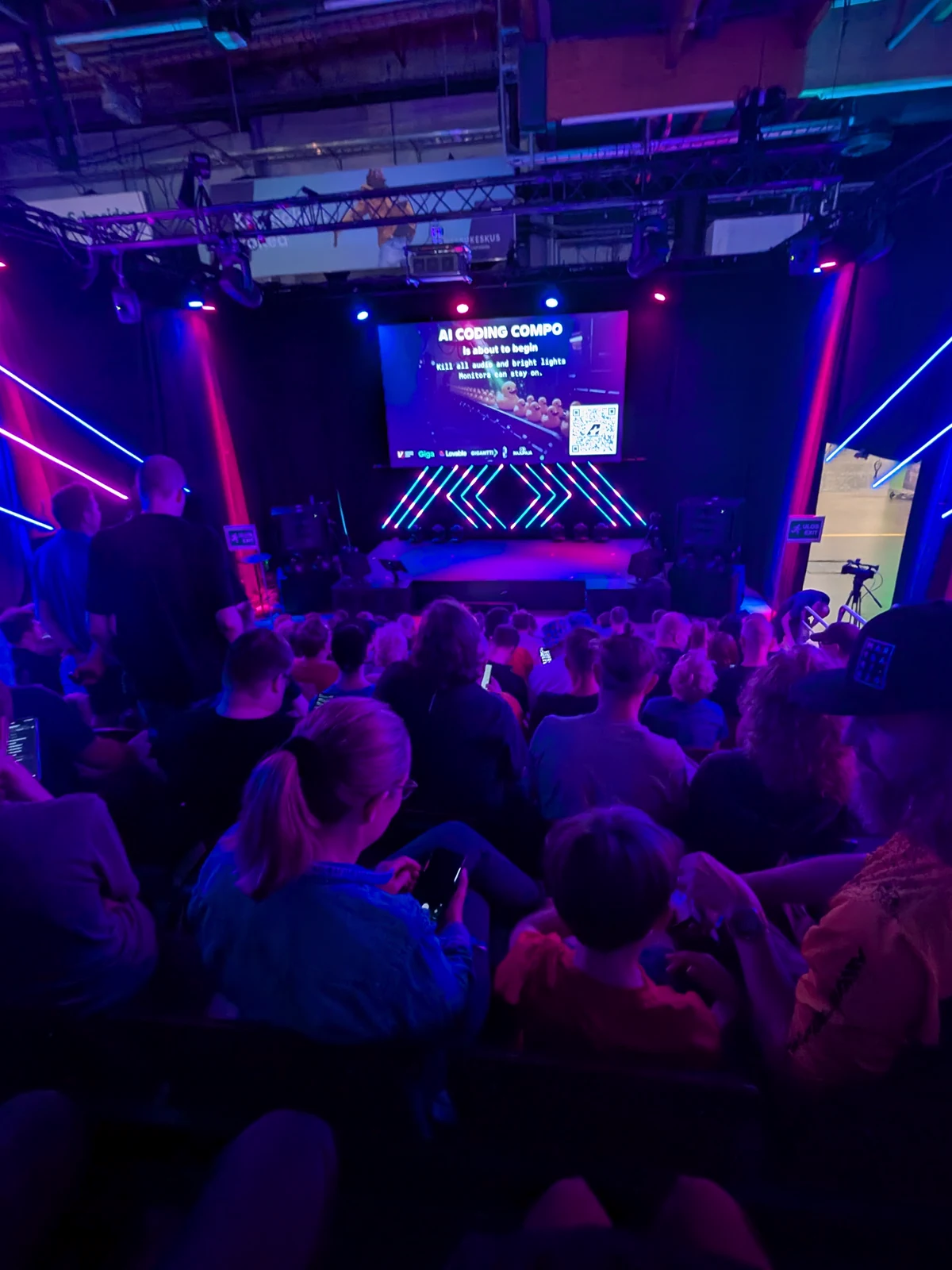
MEMORIA 028 is a three-minute generative audiovisual piece made for the Assembly Summer 2026 AI Coding competition. It begins as a restrained field of glyphs and gradually turns that vocabulary into stars, eyes, bodies, pressure waves and catastrophic reversals. My first demoscene production, it was selected for the competition's twenty-entry stage show. It ran live from the executable rather than as a prerecorded video.
One lifecycle, six universes
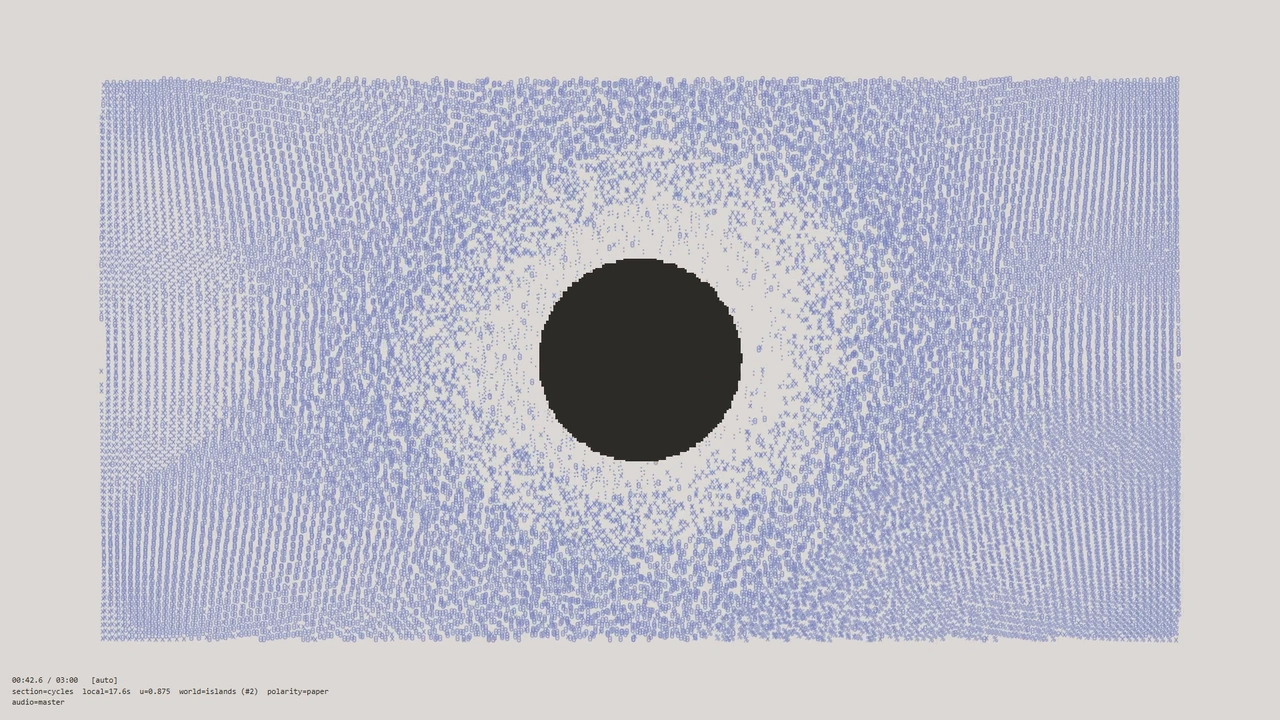
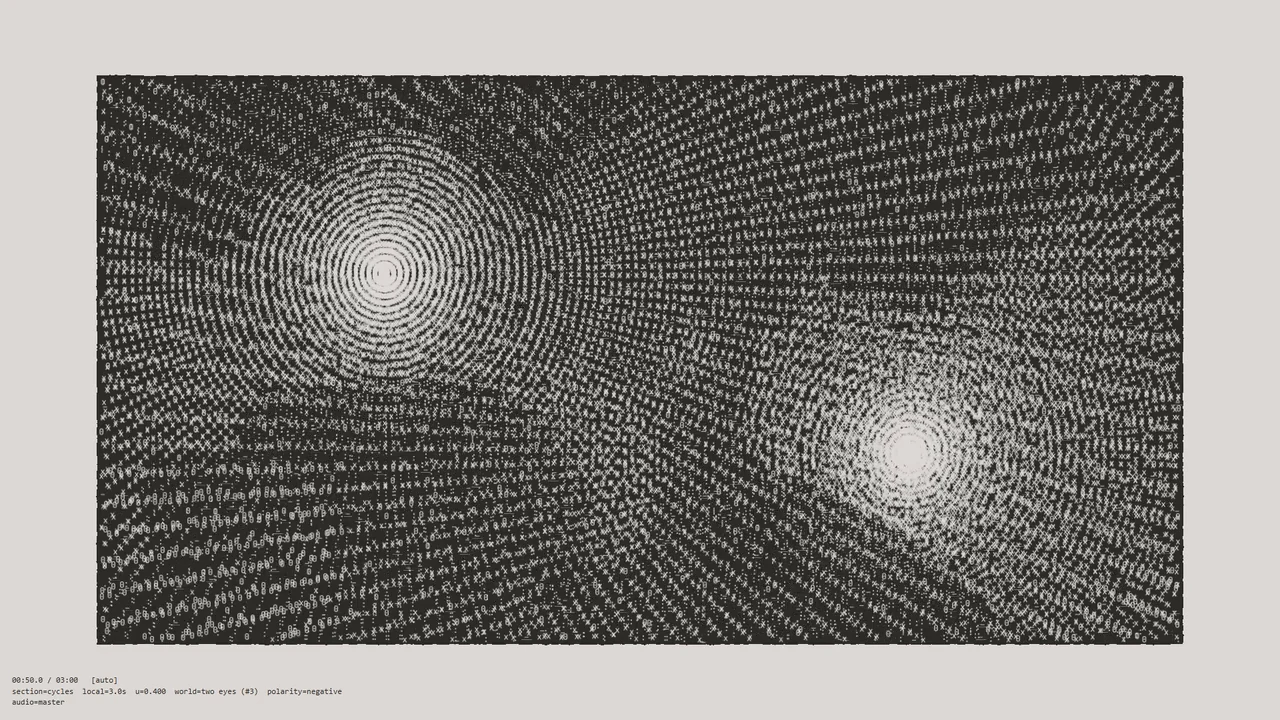
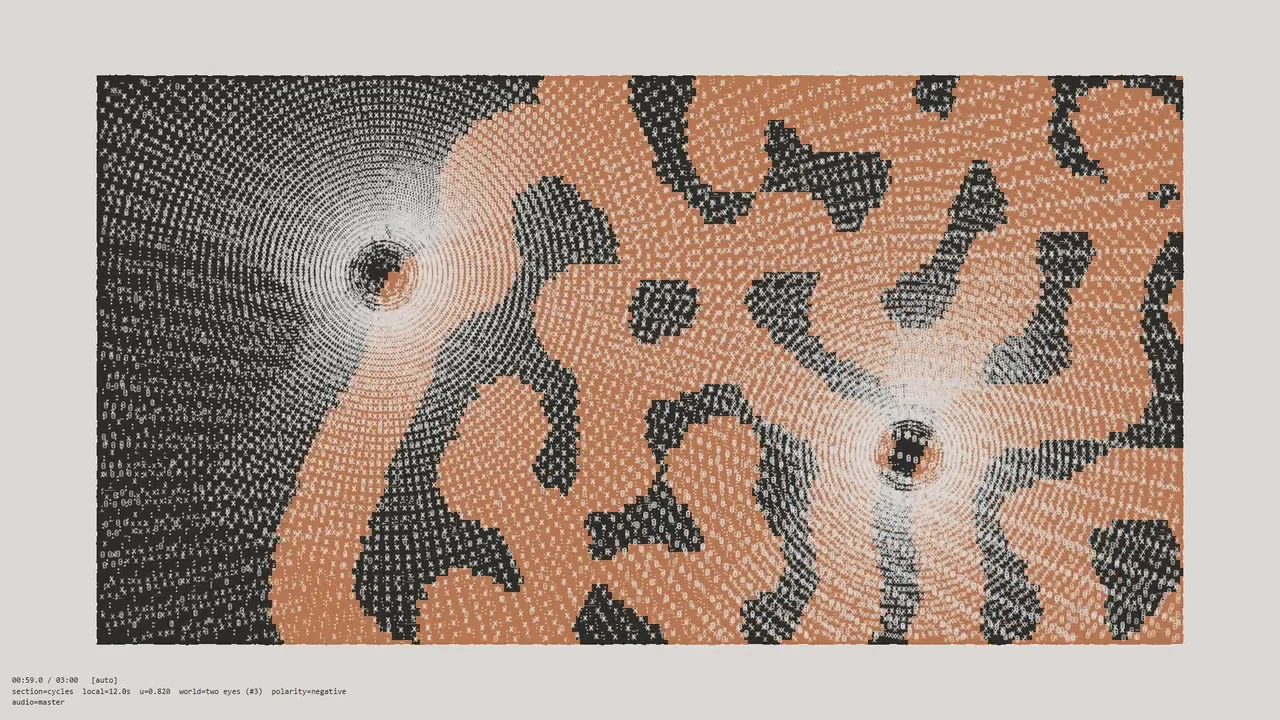
Each universe follows one node's lifecycle: a point gathers glyphs through a gravity field, develops an opening at its centre, strains, collapses, and reverses the polarity of its world. A universe may contain one node or several, but each has its own spatial rules, density, scale and composition. The sequence moves from distant stars to close, dense encounters before the last universe exceeds the frame.
Colour and sound
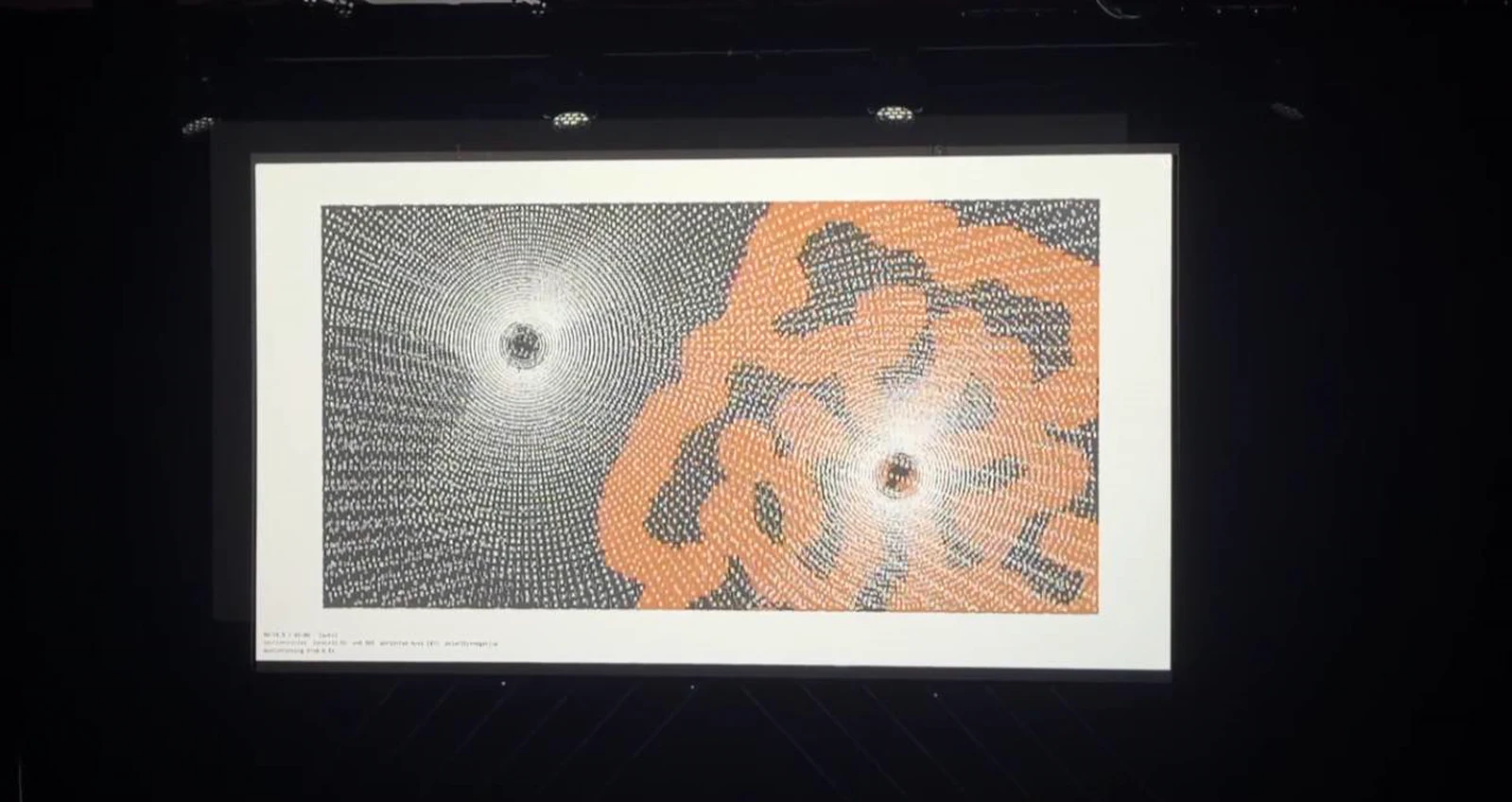
The work begins in black ink on paper. As colour arrives, it replaces black within the existing marks while the white ground remains untouched. Each universe uses a different simulation language: pressure dye, territorial cells, coarsening droplets and other centre-born systems that spread across the existing marks. The palette is generated in OKLCH from a seeded golden-angle sequence. The last universe alone keeps a reserved cerulean band.
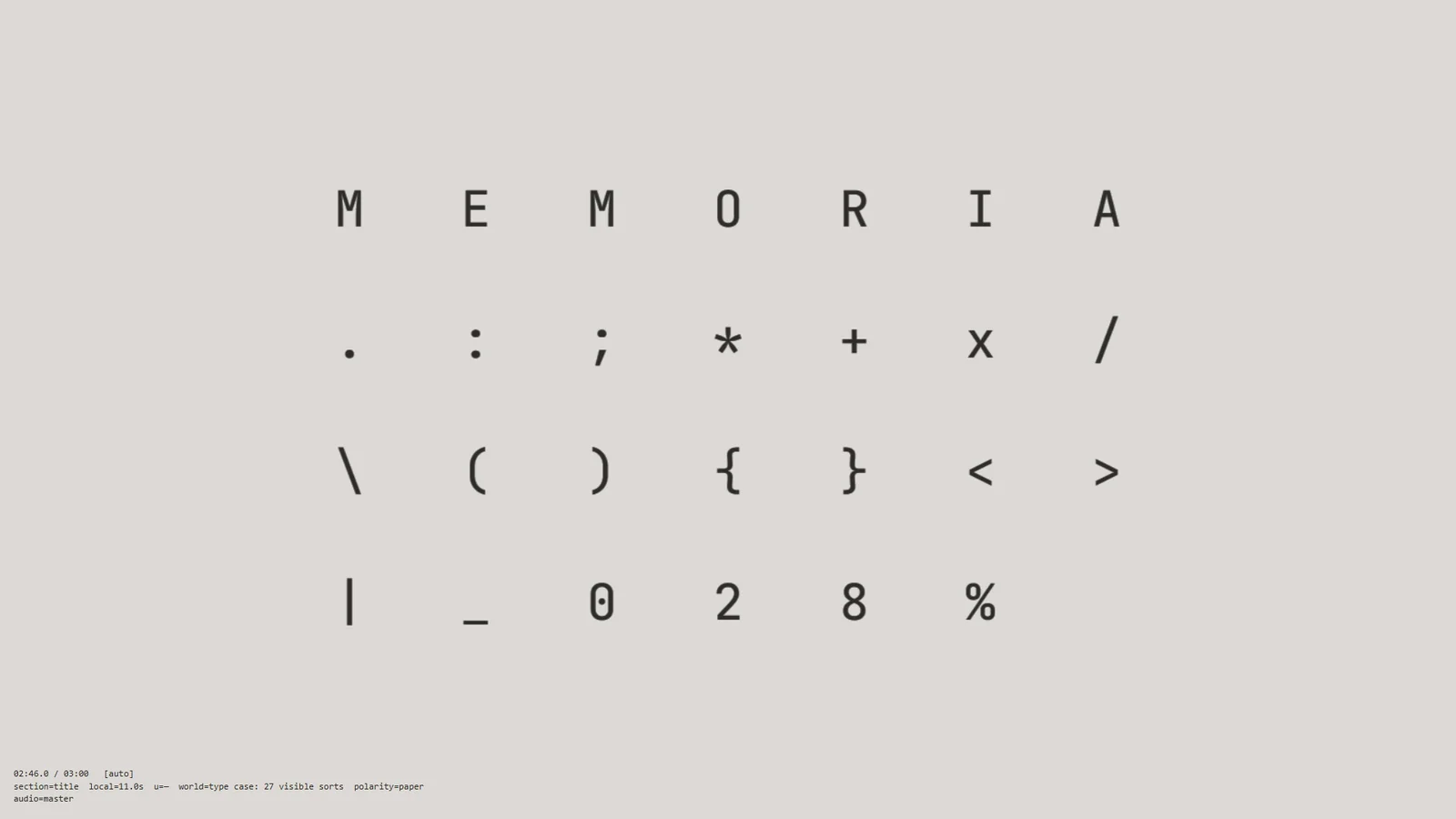
The score starts as a quiet industrial atmosphere. Half-formed collapse waves breathe outward and return. Bass, tremble and density climb with every reversal, while each new world inherits a slightly higher floor than the last. The last universe holds at the brink well past the expected break, then at the reversal the roar is pulled almost completely away, leaving a thin, high tone for the roll call and title.
How it was built
The piece is a deterministic JavaScript programme using WebGL2 for the field of glyphs, Web Audio for the procedural score, and Electron for the portable stage build. A single 180-second master timeline controls composition, colour, gravity, breath, polarity and sound, while the same source supports both real-time playback and frame-accurate offline capture. Its readout of time, section, world and polarity stays in the corner throughout; the piece is a running programme and never pretends otherwise.
I created and directed MEMORIA 028 from its initial concept to the finished stage build. I developed its visual language, narrative and six-universe structure, then organised production across a deliberately selected group of AI collaborators, choosing each system for its strengths in creative development, planning, implementation, research or sound. I maintained the specifications and production documentation, coordinated work across tools and sessions, and made the creative, editorial and technical decisions that brought the piece together. Claude, Codex, Grok and Gemini formed the production team; my role was to turn their different capabilities into one coherent work.